2026
Maritime Vessel Detection from High-Resolution Remote-Sensing Imagery
An end-to-end oriented vessel detection pipeline for remote-sensing imagery, centered on dataset engineering, annotation quality, auditability, and controlled evaluation.
YOLO11m-OBB · PyTorch · OpenCV · Remote Sensing
Validated outcome
0.7067 mAP50-95 · 0.9567 precision · 0.8620 recall
The final checkpoint was selected from an audit-fixed dataset and a bounded, multi-seed experiment process rather than a single-run tuning sweep.
- Sources
- DOTA v2.0 · xView · HRSC2016-MS
- Training set
- 5,351 image/label pairs
- Final labels
- 98,768 oriented vessel annotations
- Model
- YOLO11m-OBB
- Input
- 1280 px · 40 epochs
- Curation
- 175+ hours
01 / Problem
A dataset problem before a model problem
Public remote-sensing datasets were not directly interchangeable for maritime oriented detection. They differed in image scale, spatial resolution, annotation geometry, scene composition, and label consistency.
Large source images also required tiling before training, introducing duplicate observations, partial edge objects, and coordinate-management problems. xView introduced an additional geometry mismatch because its vessel labels were horizontal bounding boxes rather than oriented bounding boxes.
The engineering problem therefore became broader than model fine-tuning: construct a consistent, auditable maritime dataset before optimizing the detector.
02 / Approach
Parent-space annotations, derived training tiles
I combined DOTA v2.0, xView, and HRSC2016-MS into a maritime-focused dataset while retaining hard-negative context such as docks, shorelines, cranes, container infrastructure, and open water.
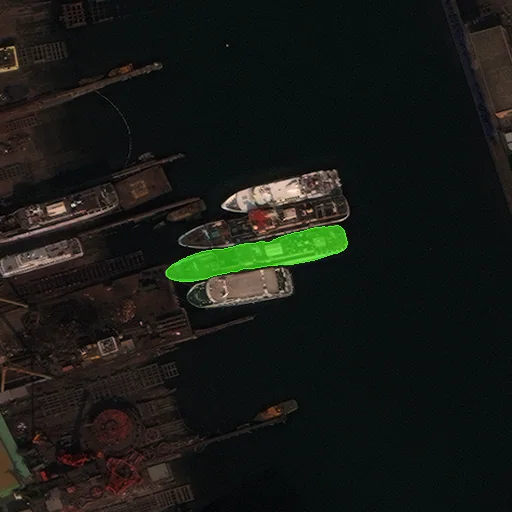
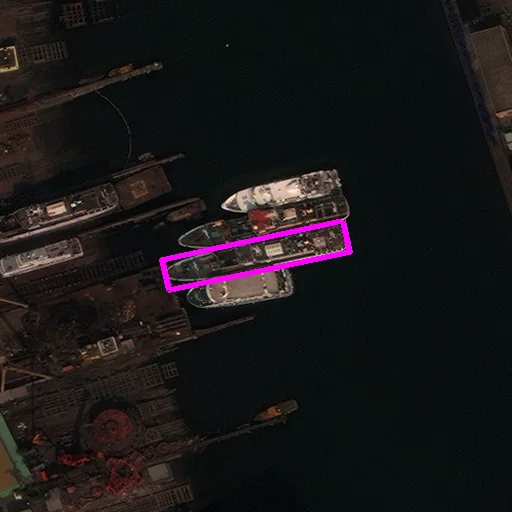
For xView vessel annotations, the geometry conversion followed HBB → SAM3 mask → OBB. Two manual annotation passes corrected missing ships, false positives, incorrect rotations, duplicate labels, truncated objects, and ambiguous small targets.
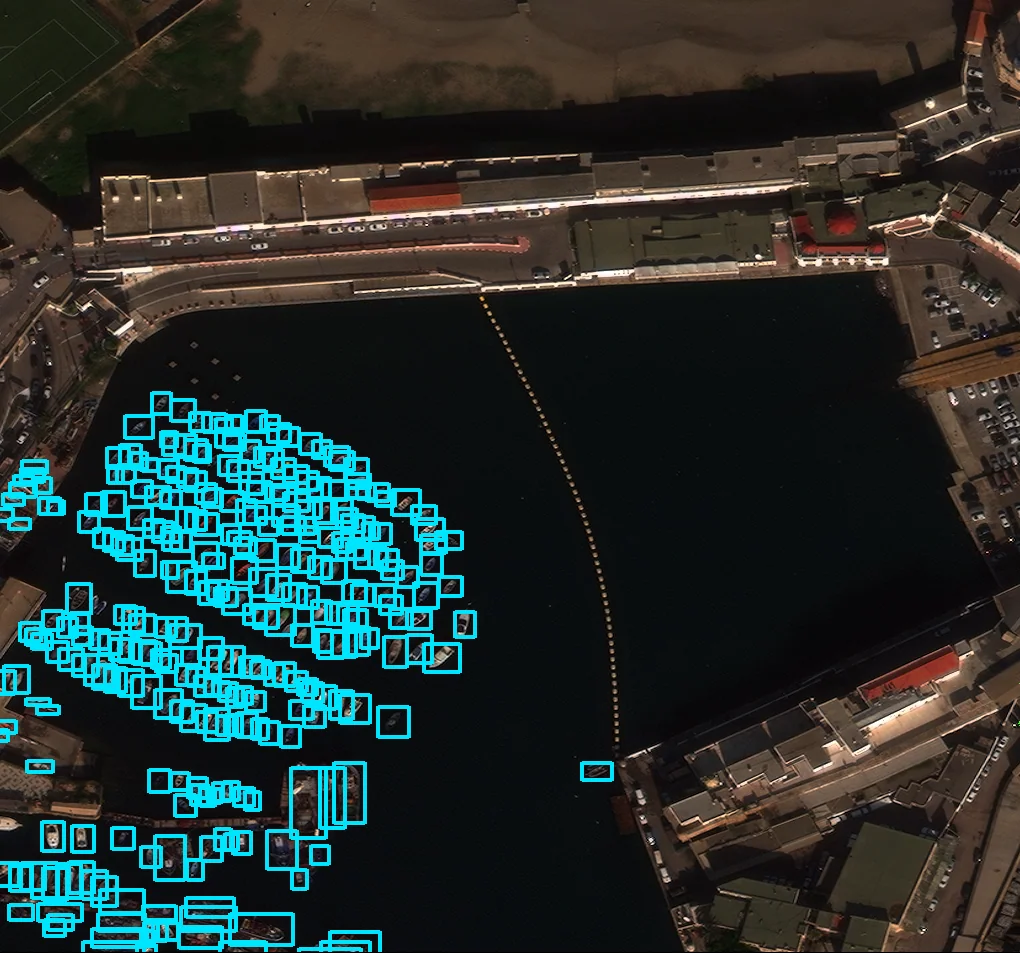
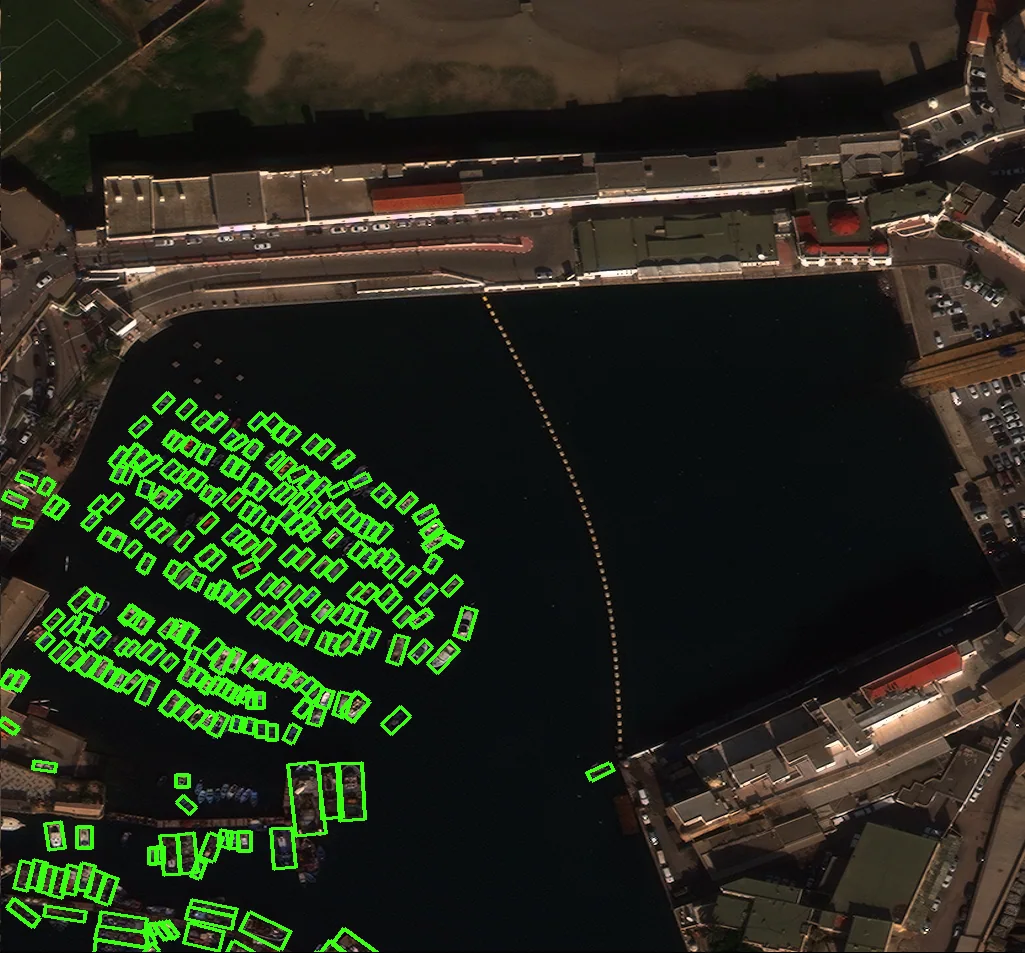
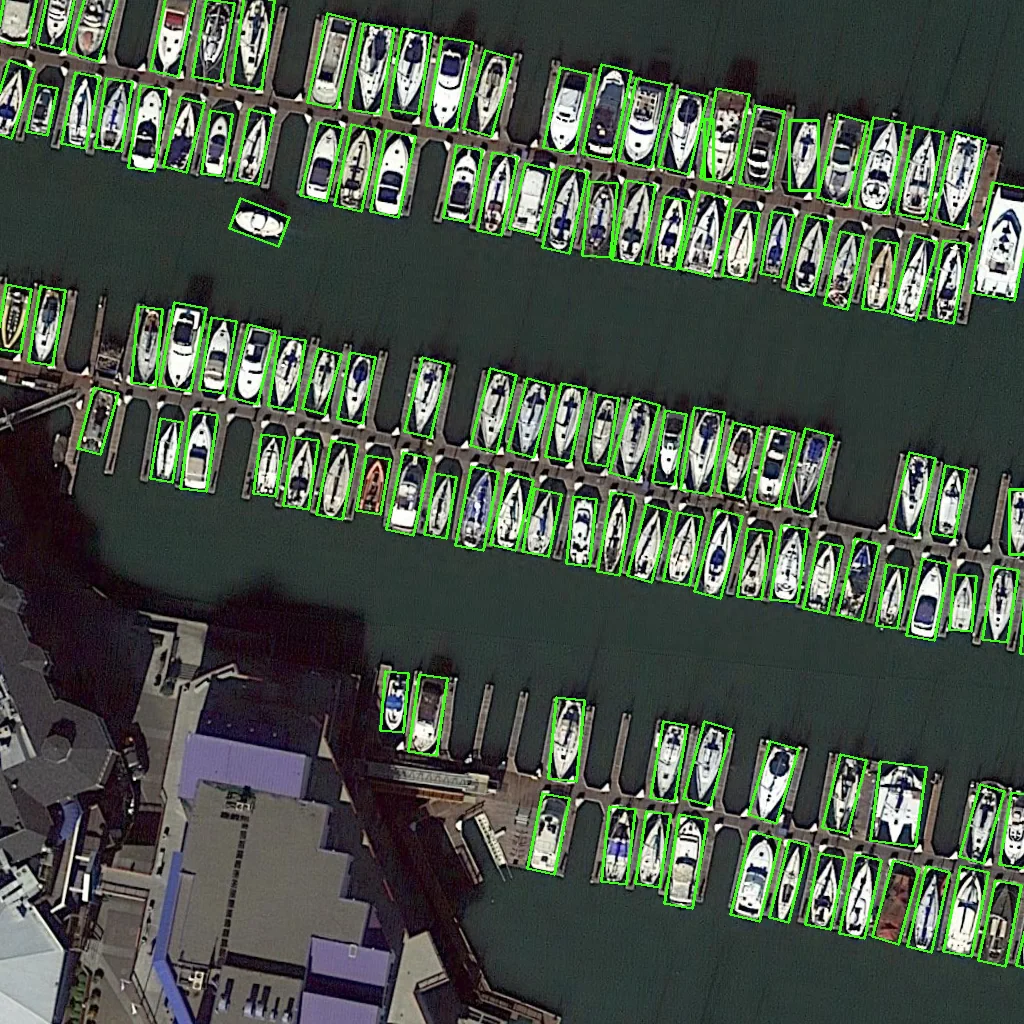
Tile-local corrections were reconstructed into canonical parent-image coordinates. This changed the annotation architecture so that parent-space annotations became the source of truth and training tiles became derived views.
- maritime region-of-interest selection
- deterministic fixed-size crops
- annotation-driven recovery tiles
- intentionally retained negative maritime scenes
After the second manual review, the frozen dataset underwent a structural audit before controlled model experiments began.
03 / Data Lineage
An audit-first engineering sequence
The project progressed from public datasets through maritime filtering, geometry normalization, manual review, parent-space recovery, maritime-aware tiling, model-assisted review, structural audit, controlled data-quality experiments, and final model selection. The largest architectural shift was moving from a tile-first workflow to a parent-first representation.
01
Raw aerial datasets
DOTA · xView · HRSC2016-MS02
Maritime-context filtering
Remove low-value inland context03
Manual parent image review
Correct, add, or discard labels04
SAM3 / SixOpen support
Candidate masks and detections05
Audit-fixed training dataset
Repaired tiling, coverage, duplicates06
Controlled experiments
Filtering, resolution, augmentation, HPO07
Final YOLO11m-OBB detector
Selected model recipe04 / Dataset Engineering
Source data, geometry conversion, and review
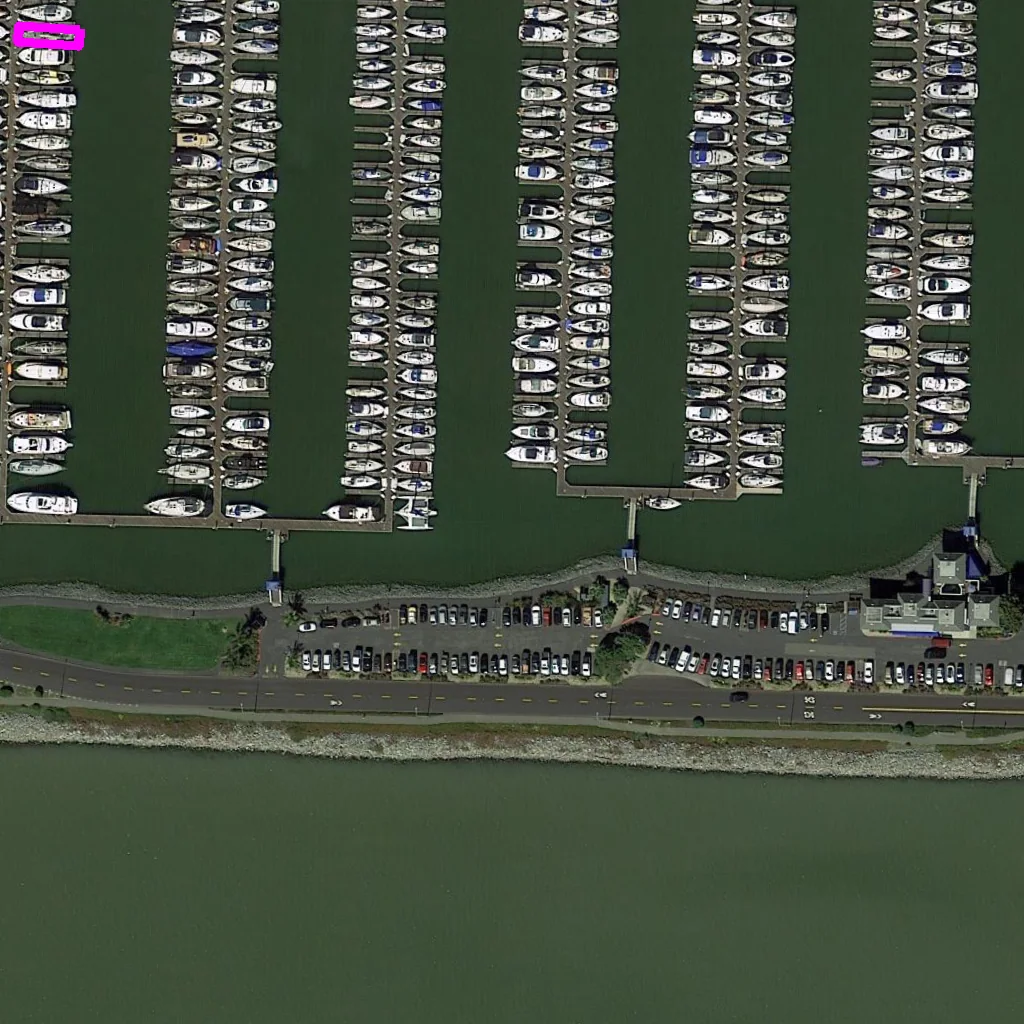
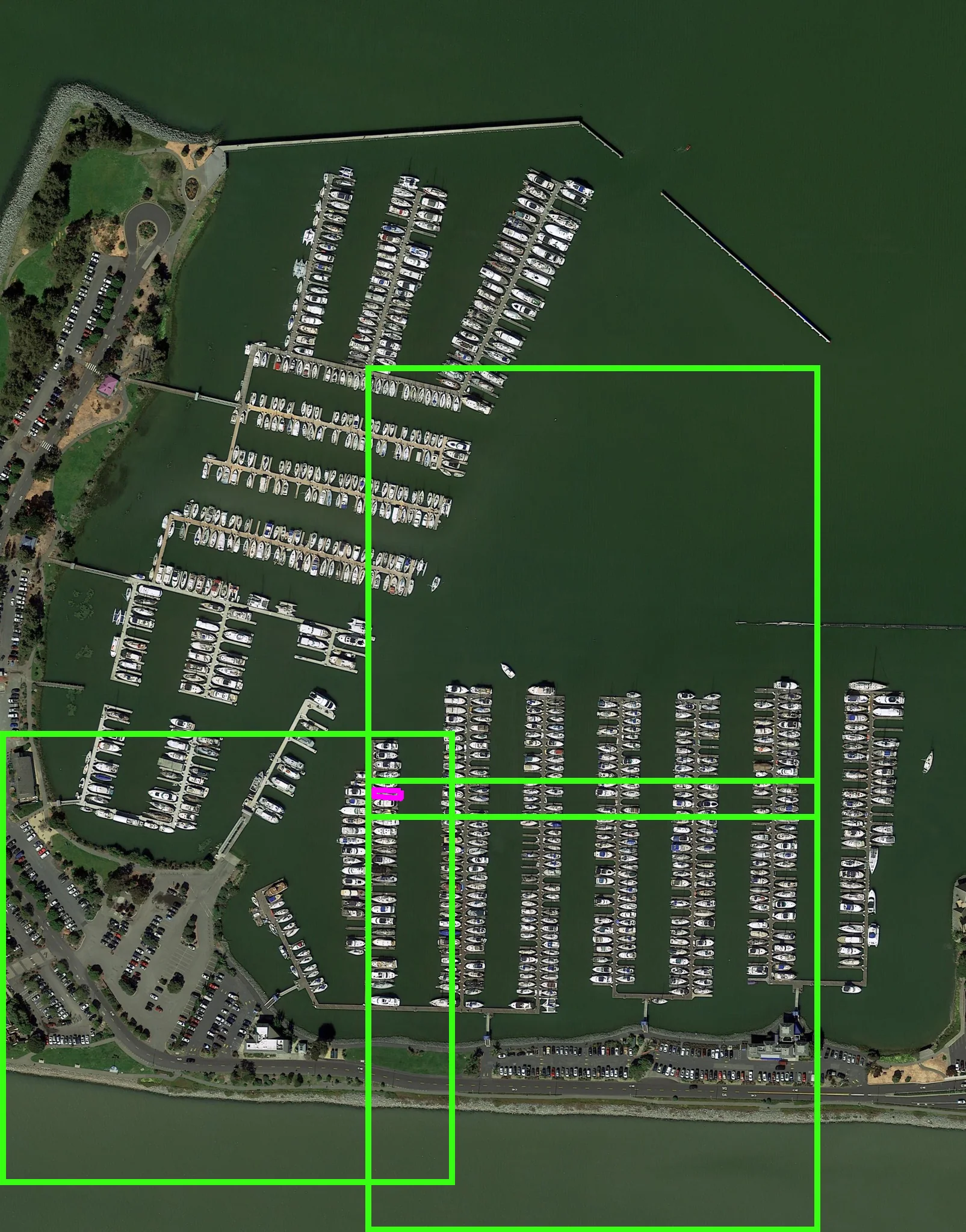
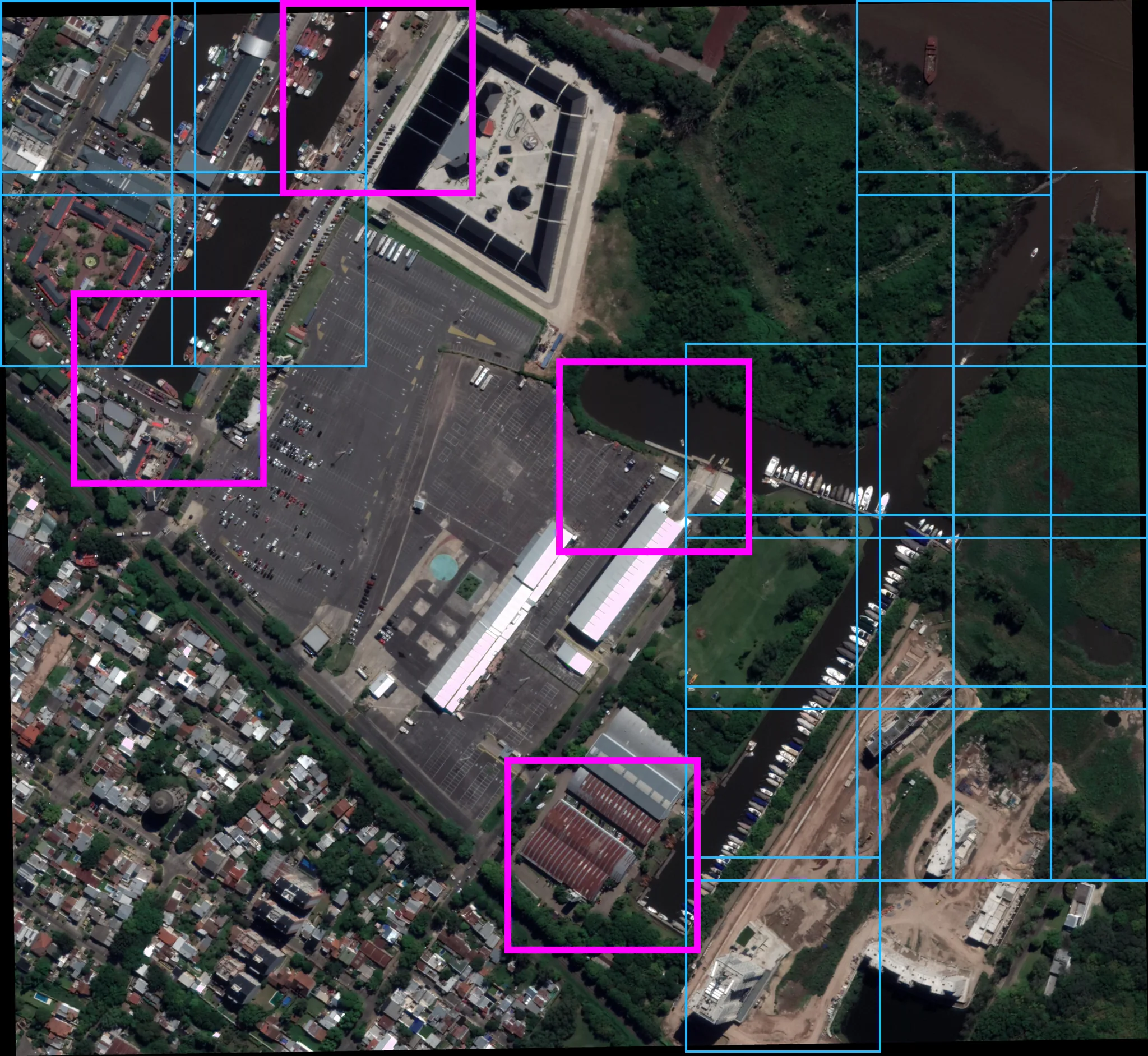
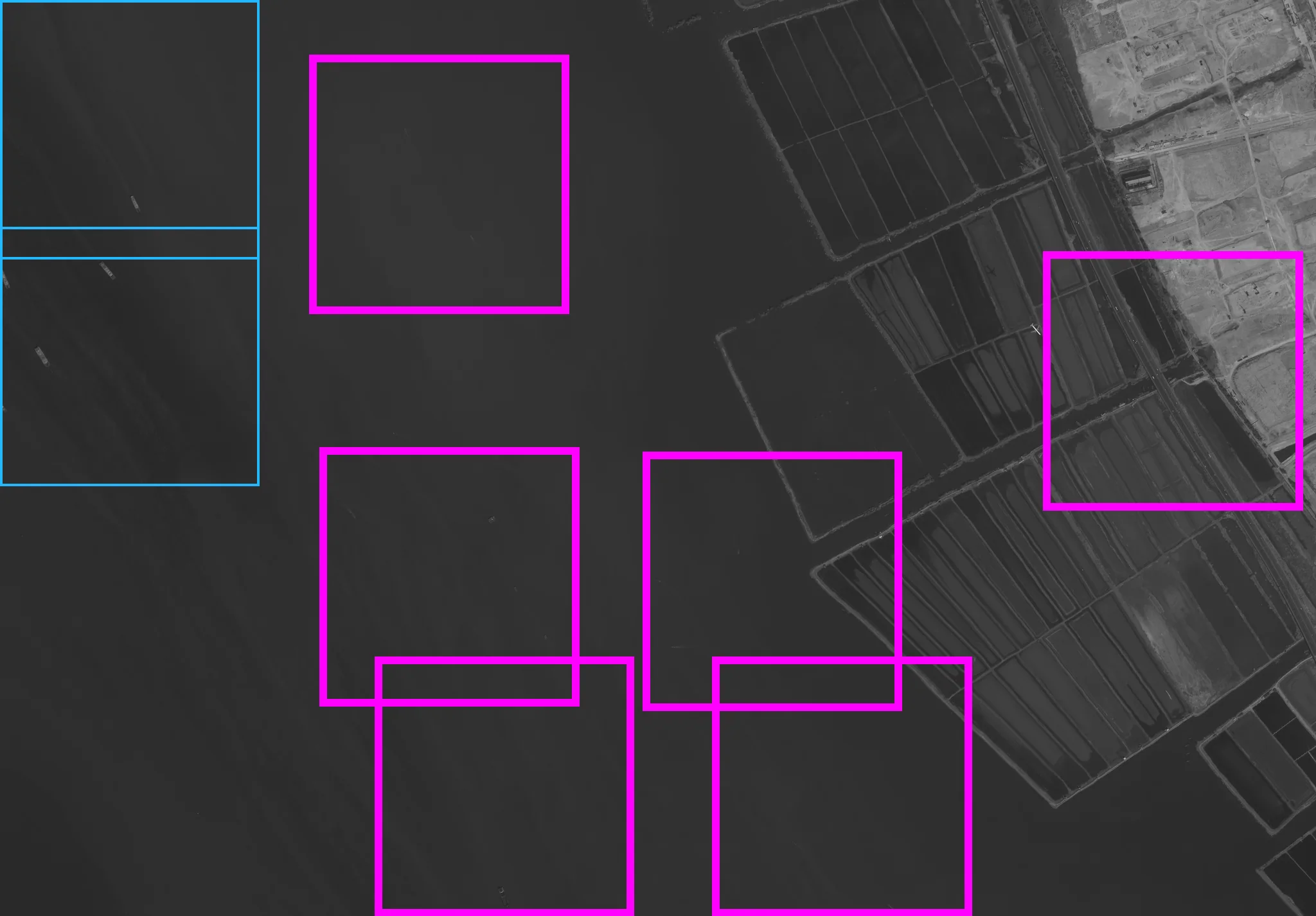
The initial source pool contained 4,356 labeled images and 281,423 source annotations. Scenes were retained based on maritime context as well as vessel labels, preserving realistic hard negatives that help suppress false positives.
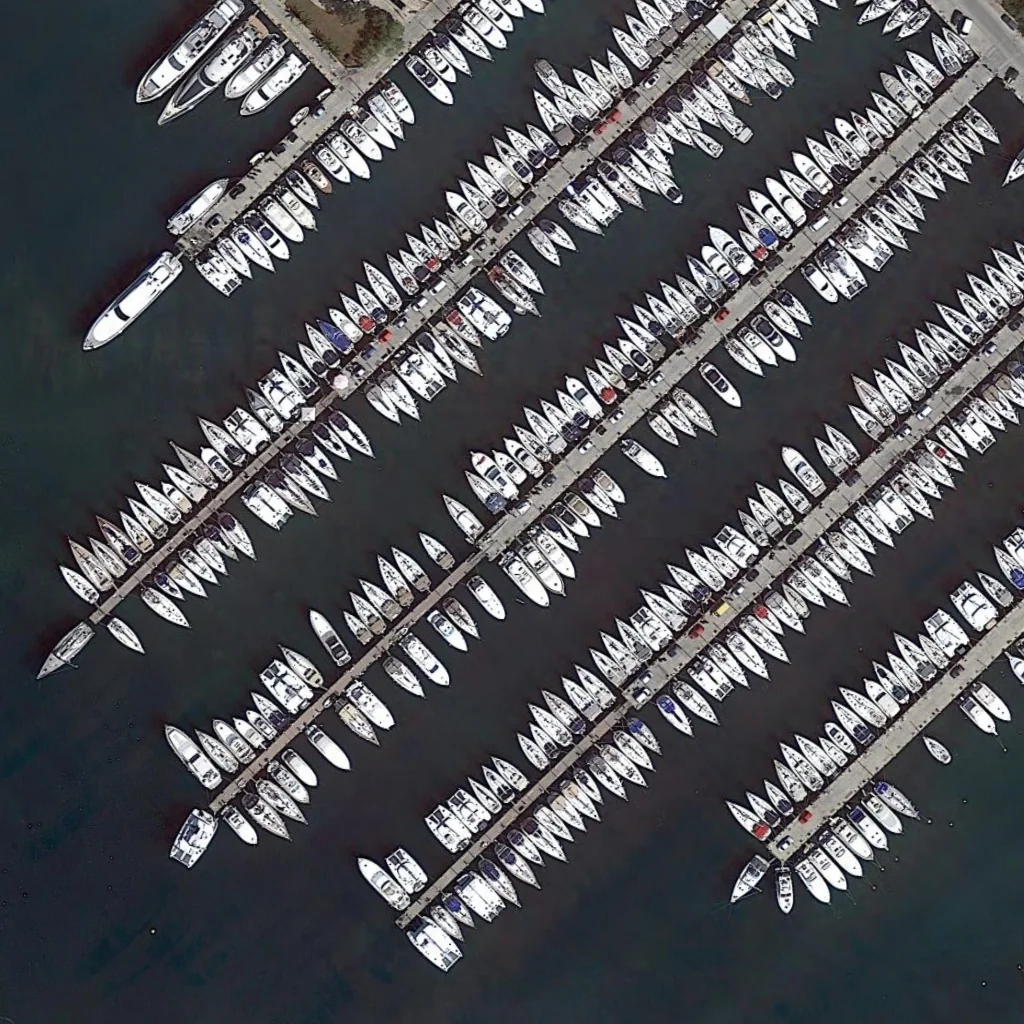
DOTA v2.0
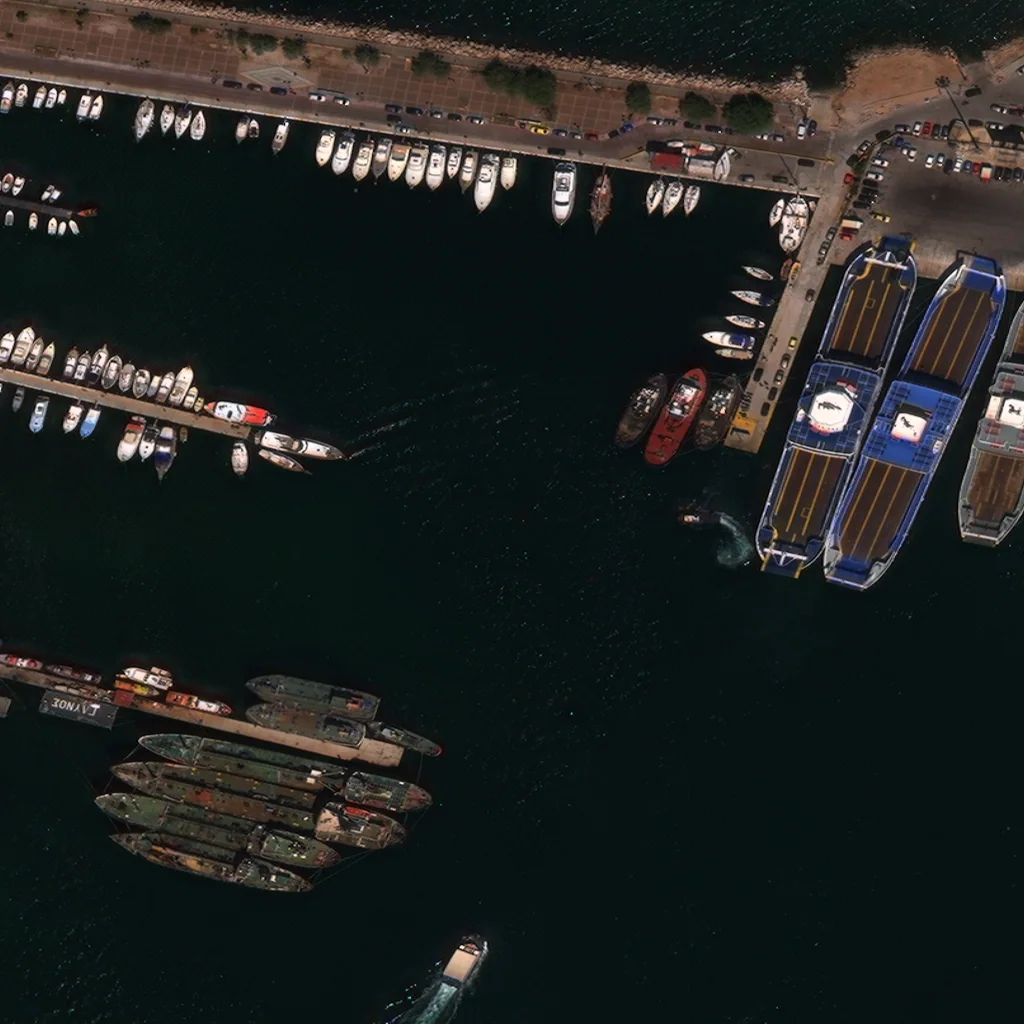
xView
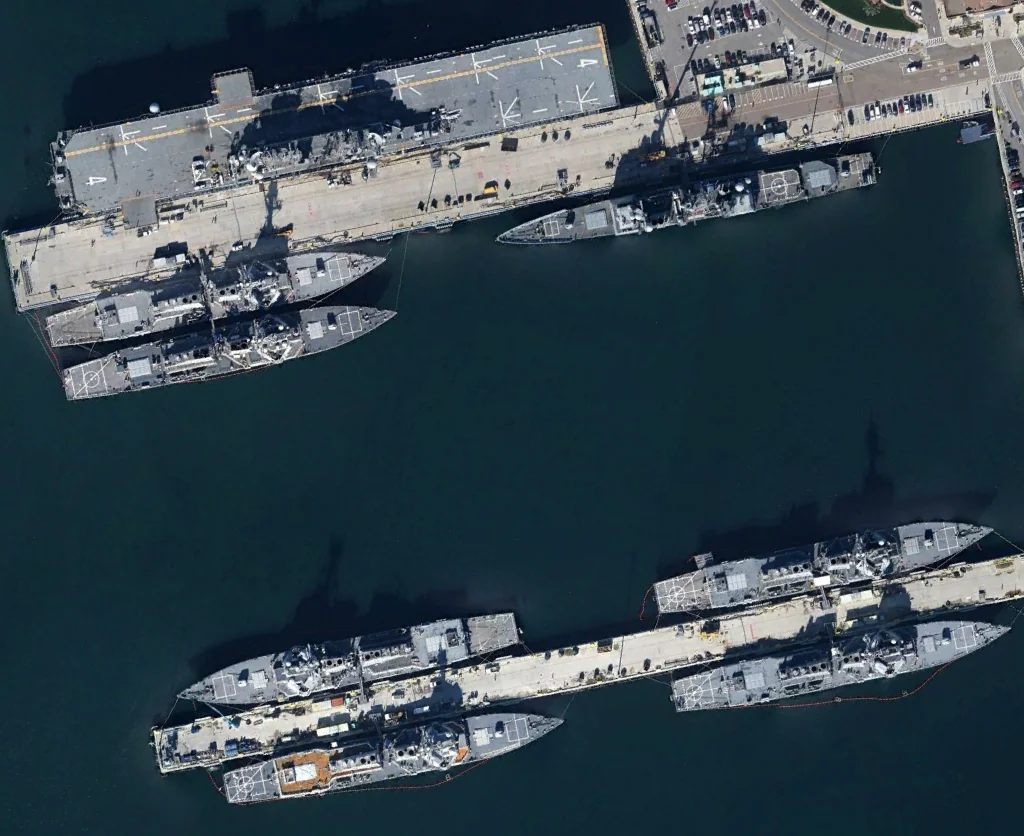
HRSC2016-MS
Annotation geometry conversion
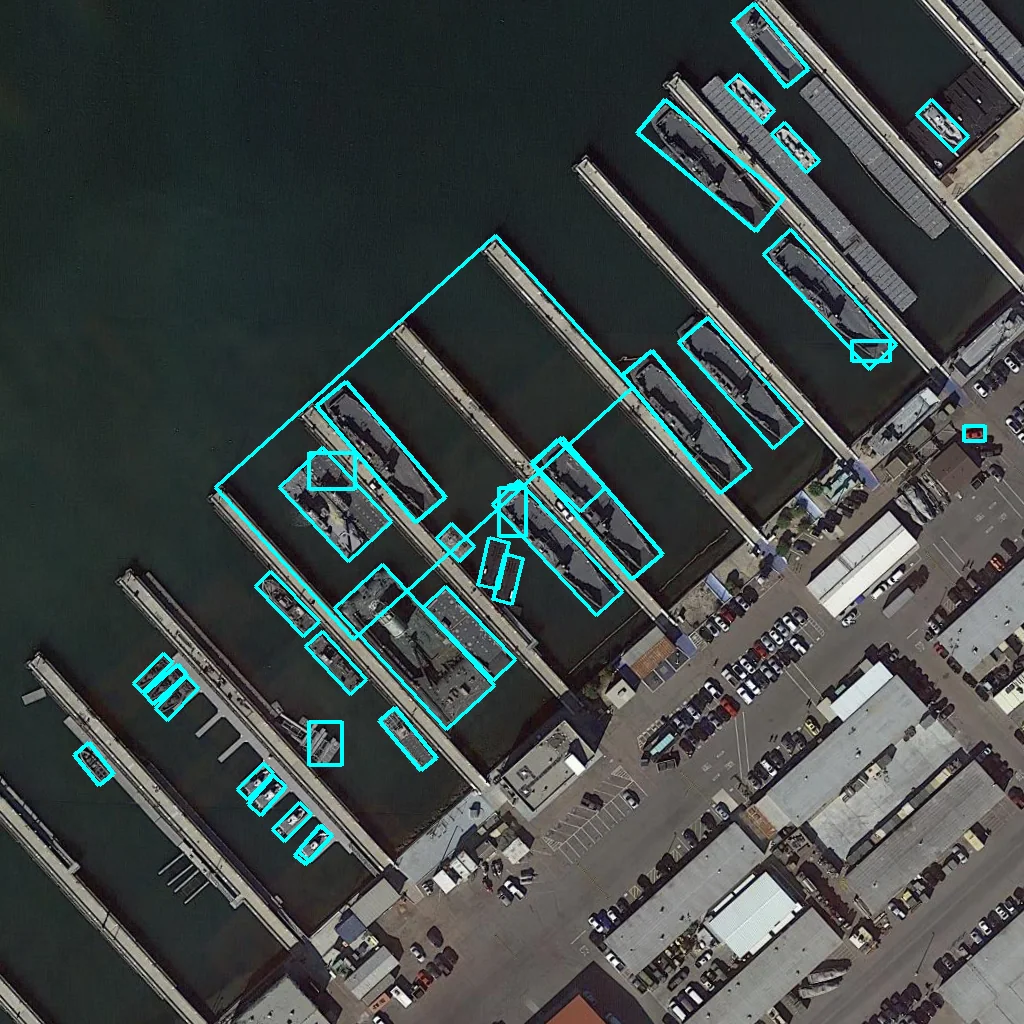
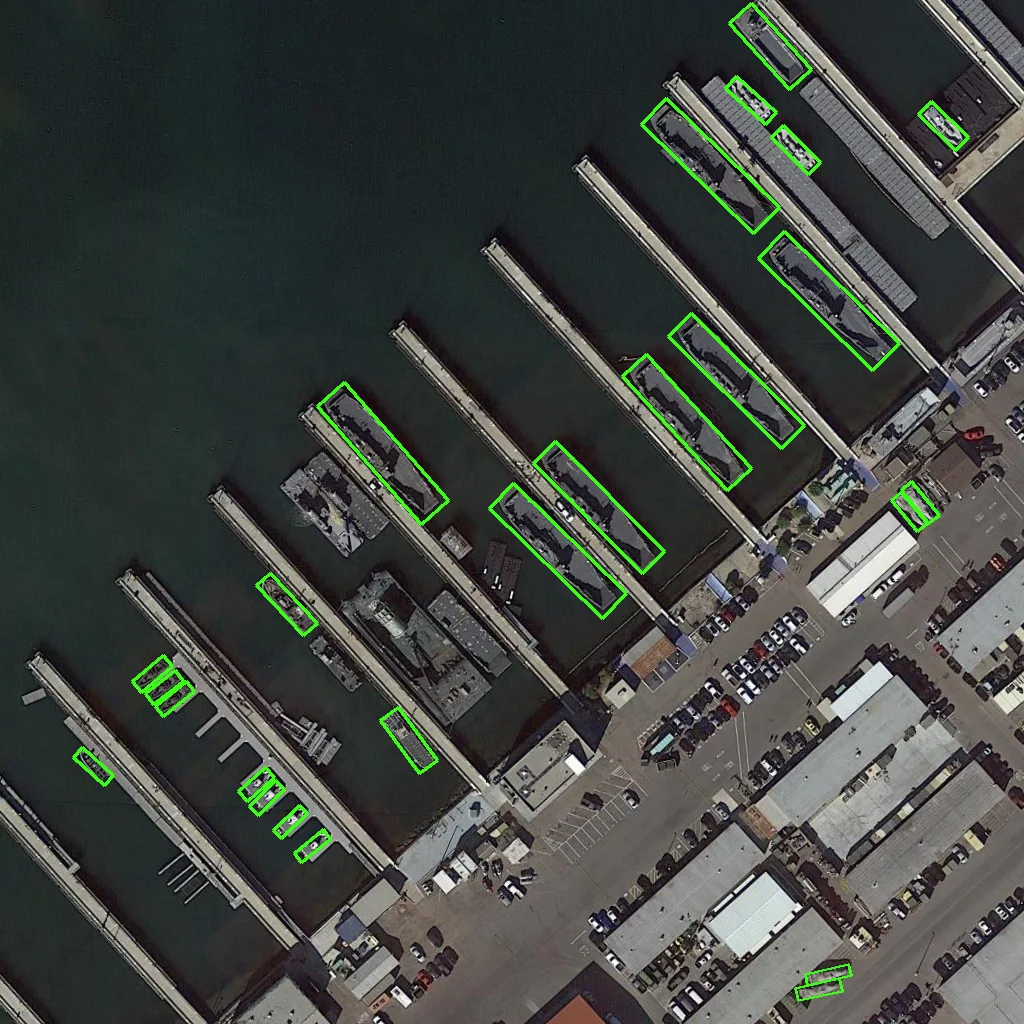
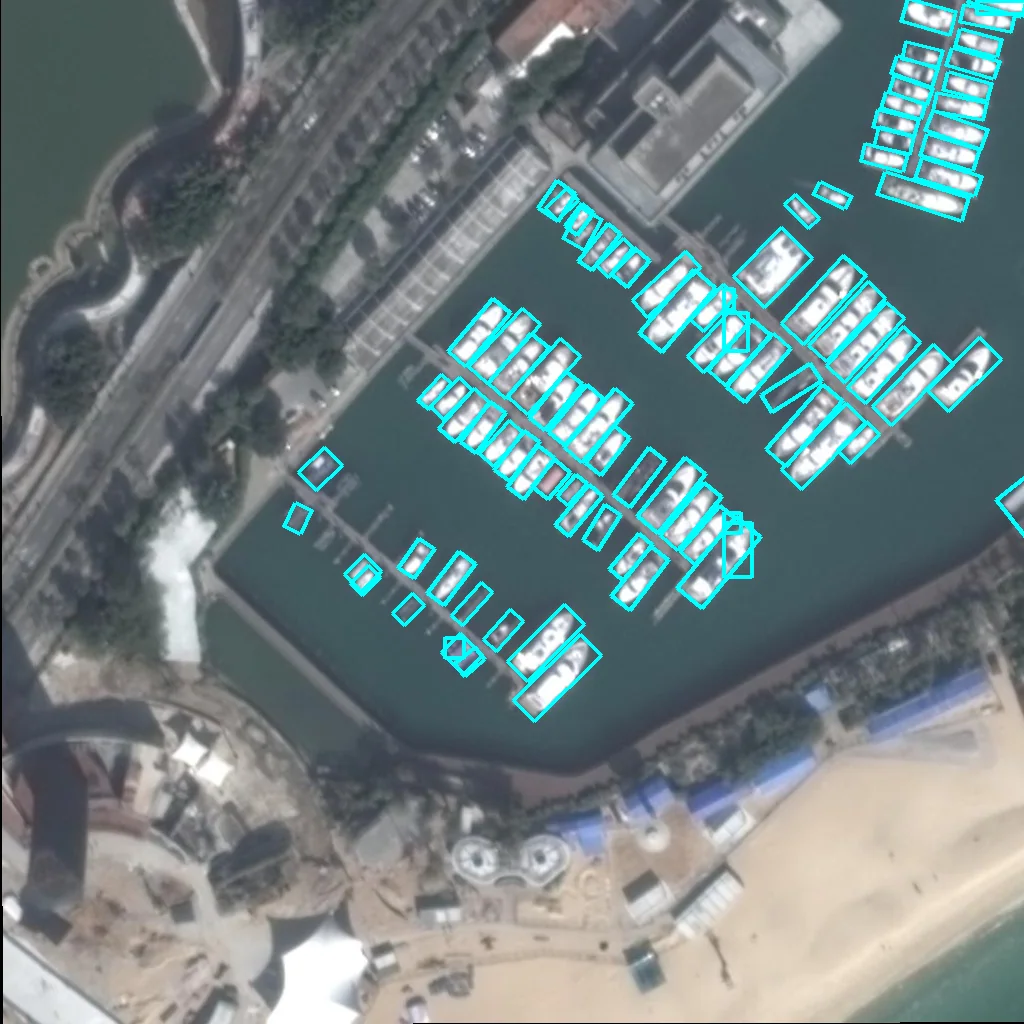
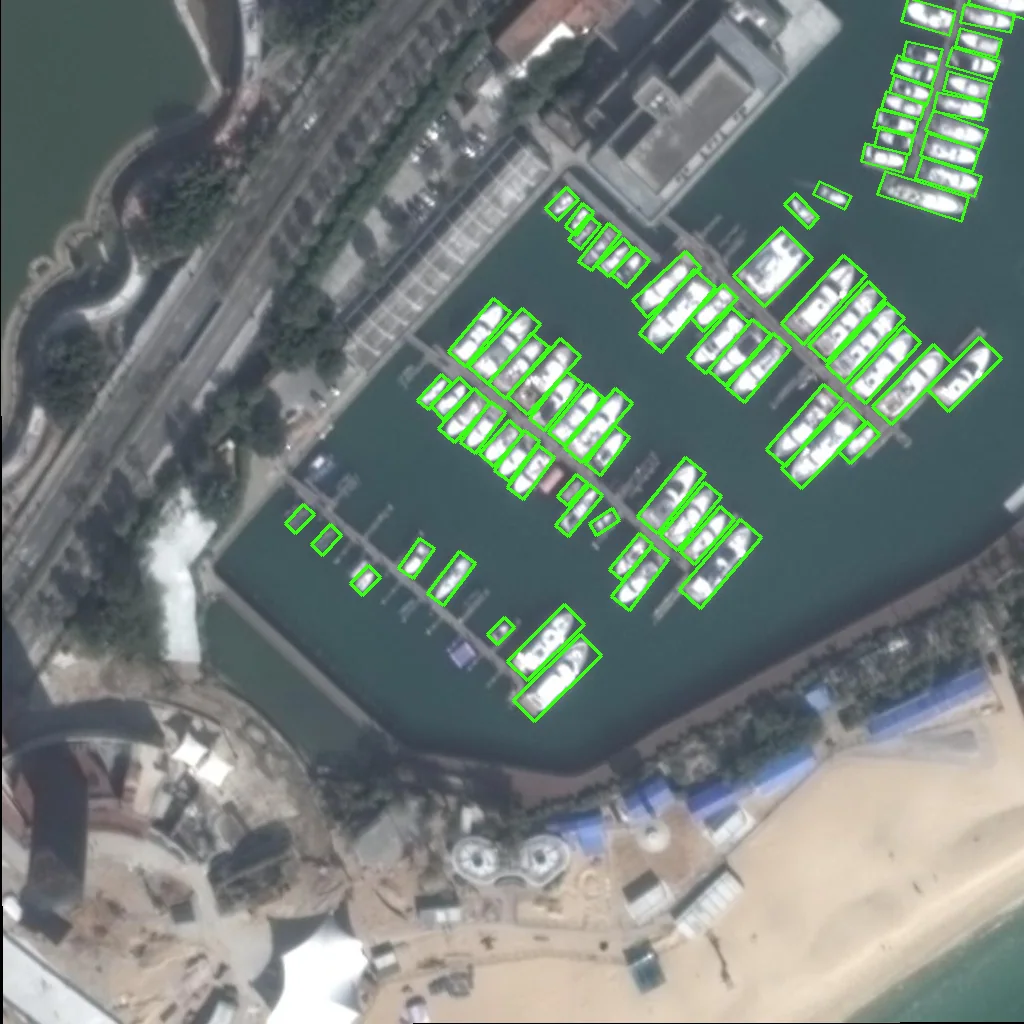
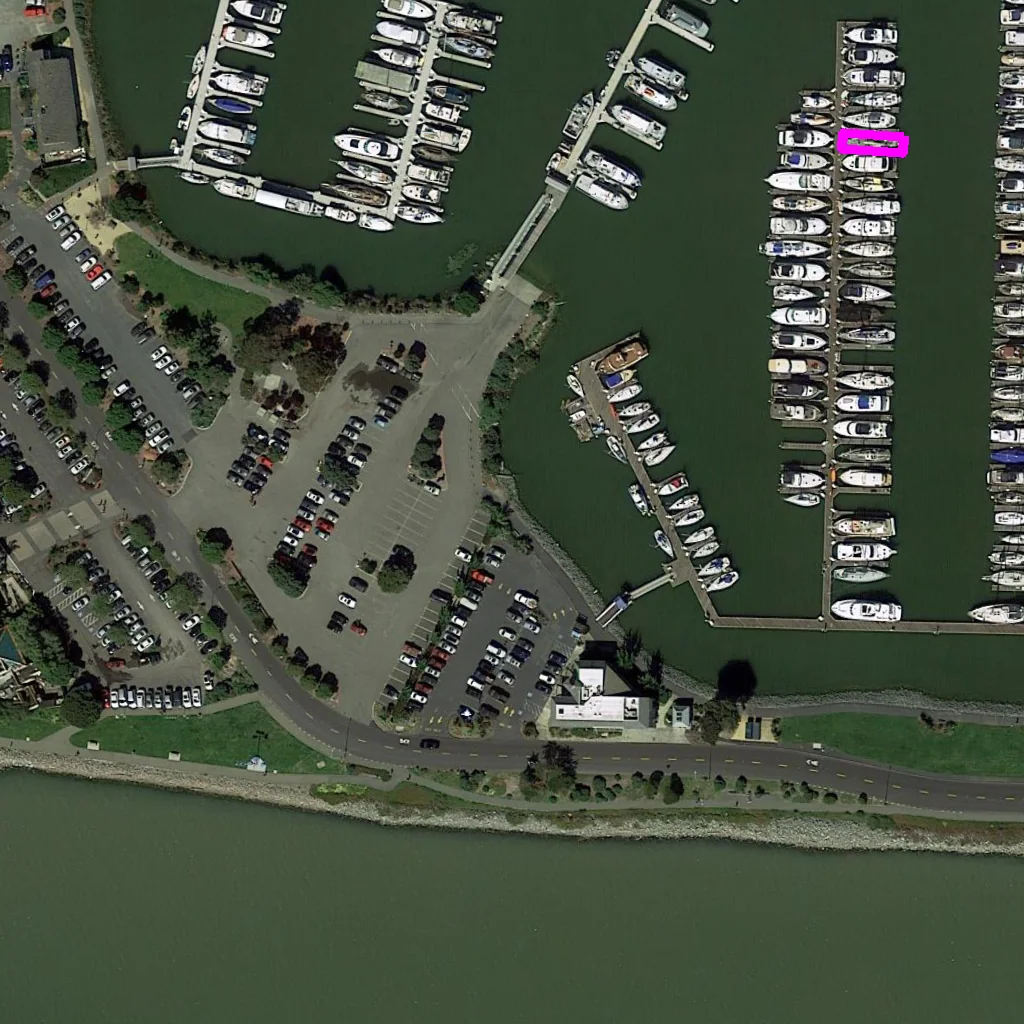
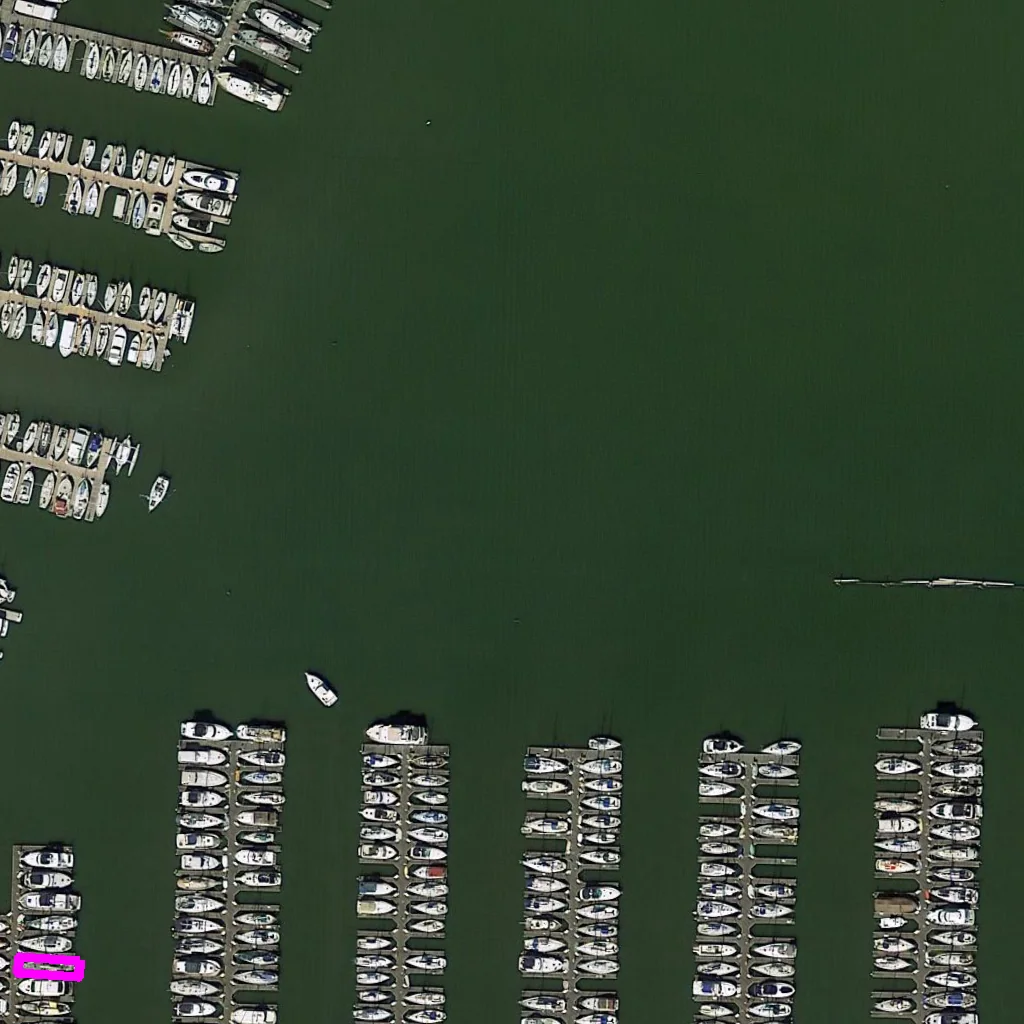
The annotation work became the most labor-intensive component of the project. The first manual pass required more than 100 hours of review. A second pass added approximately 75 hours after parent-space recovery, revised tiling, SAM3 candidates, and external maritime predictions became available.
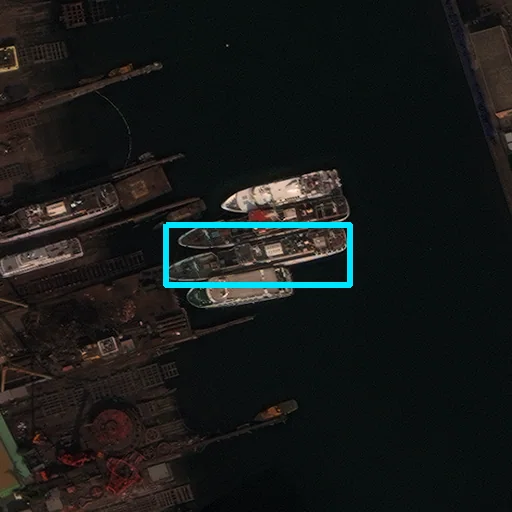
HBB
Mask
OBB
Canonical parent-space OBBs with OBB and mask representations where required.
Tile provenance, recovery-tile lineage, and deterministic dataset regeneration.
Parent recovery and tiling
First pass 01
First pass 02
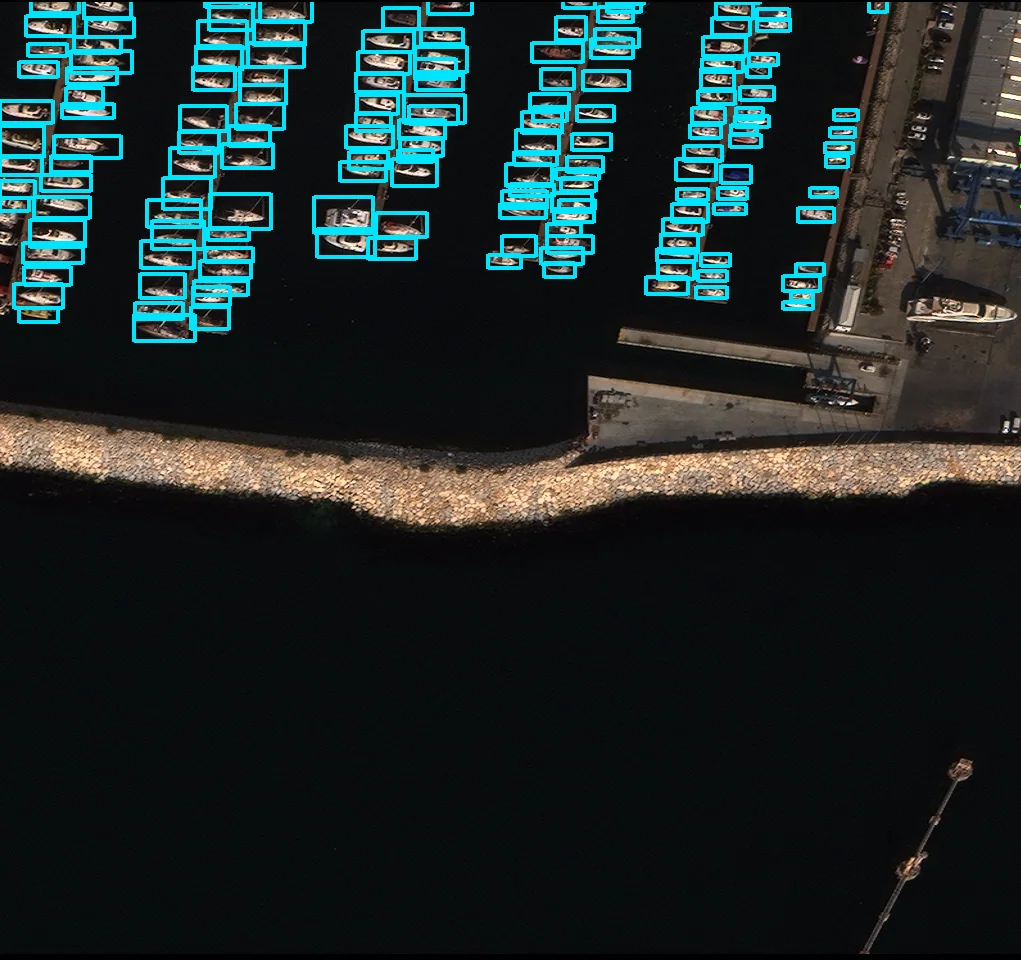
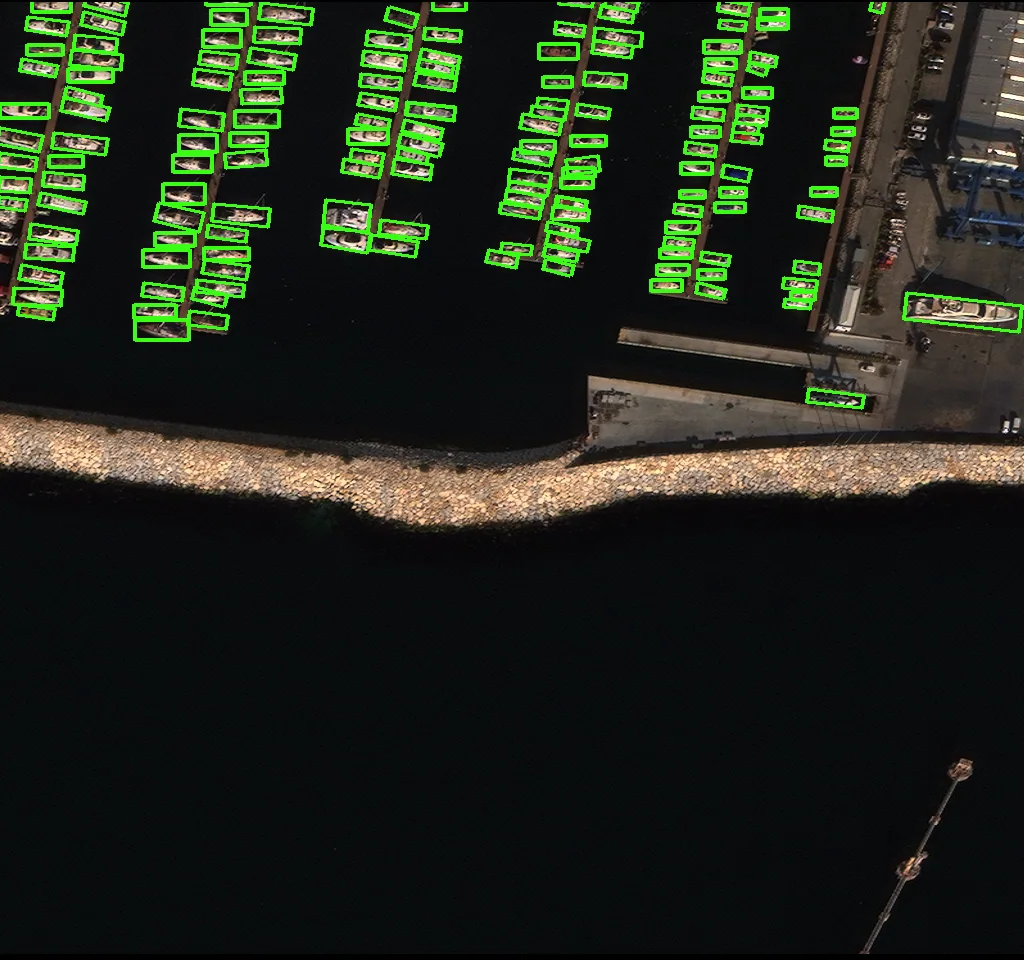
First pass 03
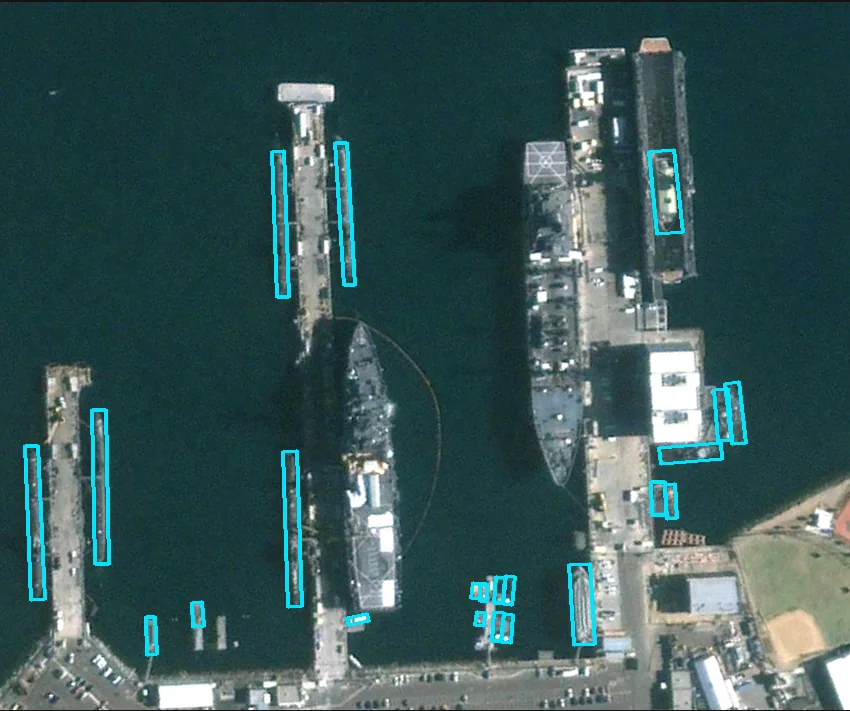
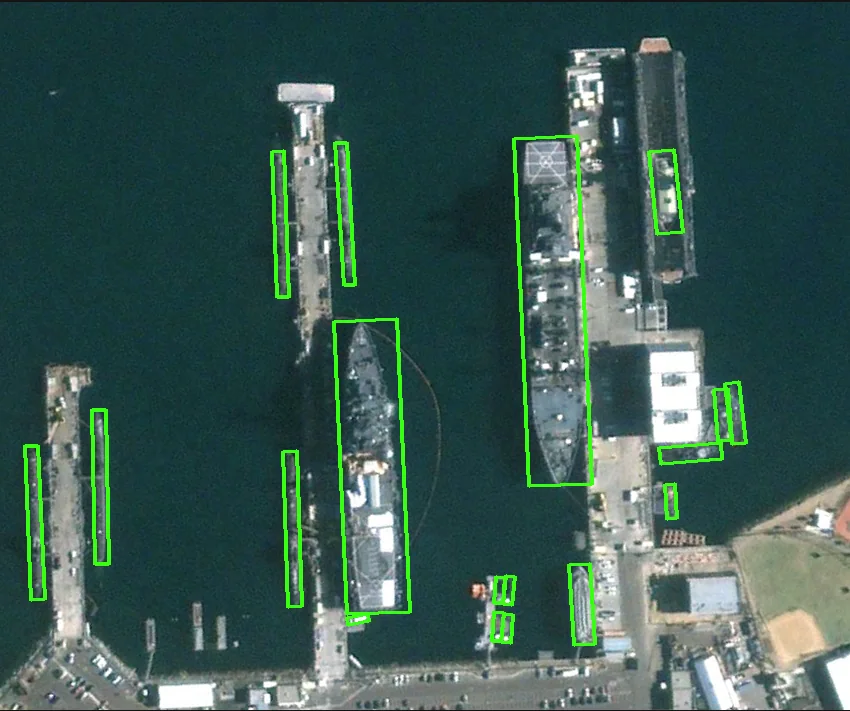
Second pass 01
Second pass 02
Second pass 03
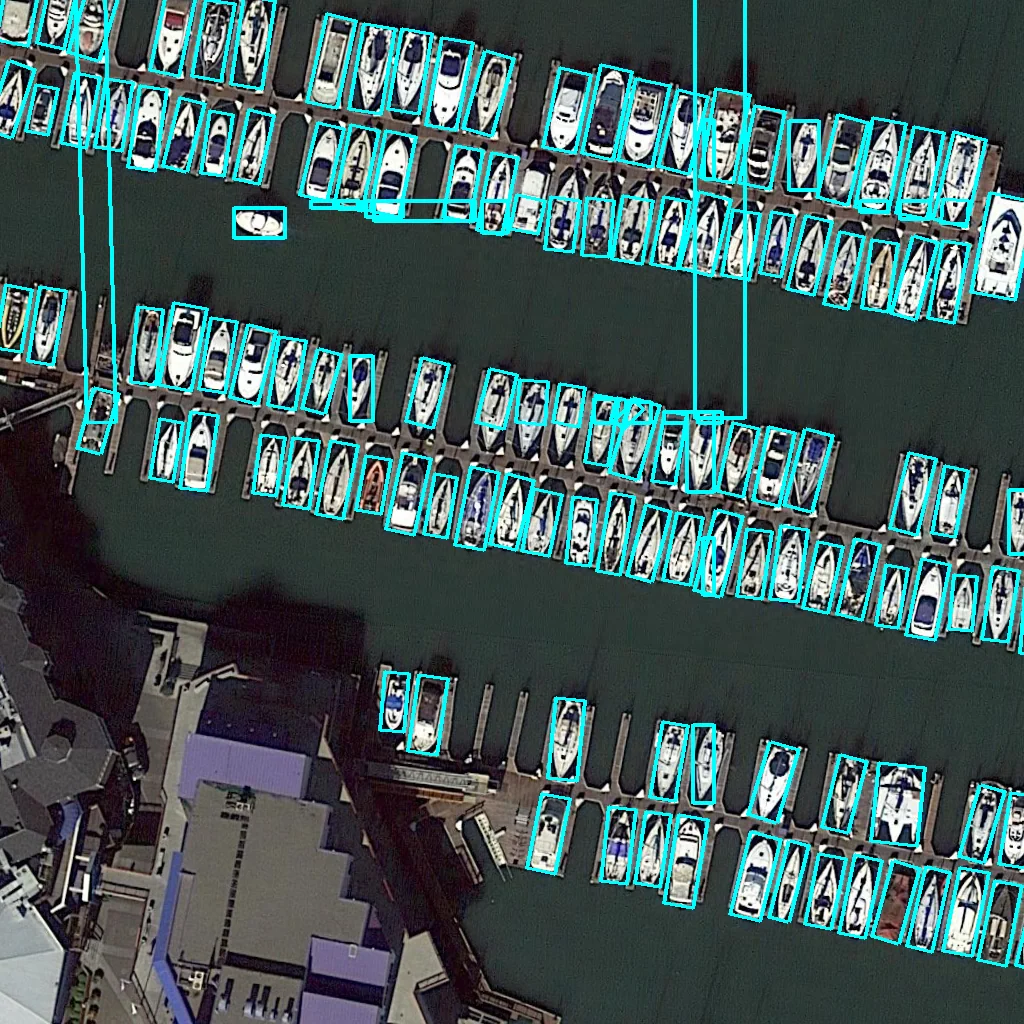
Tile-local annotations
Recovered parent-space annotations
ROI selection
Deterministic grid
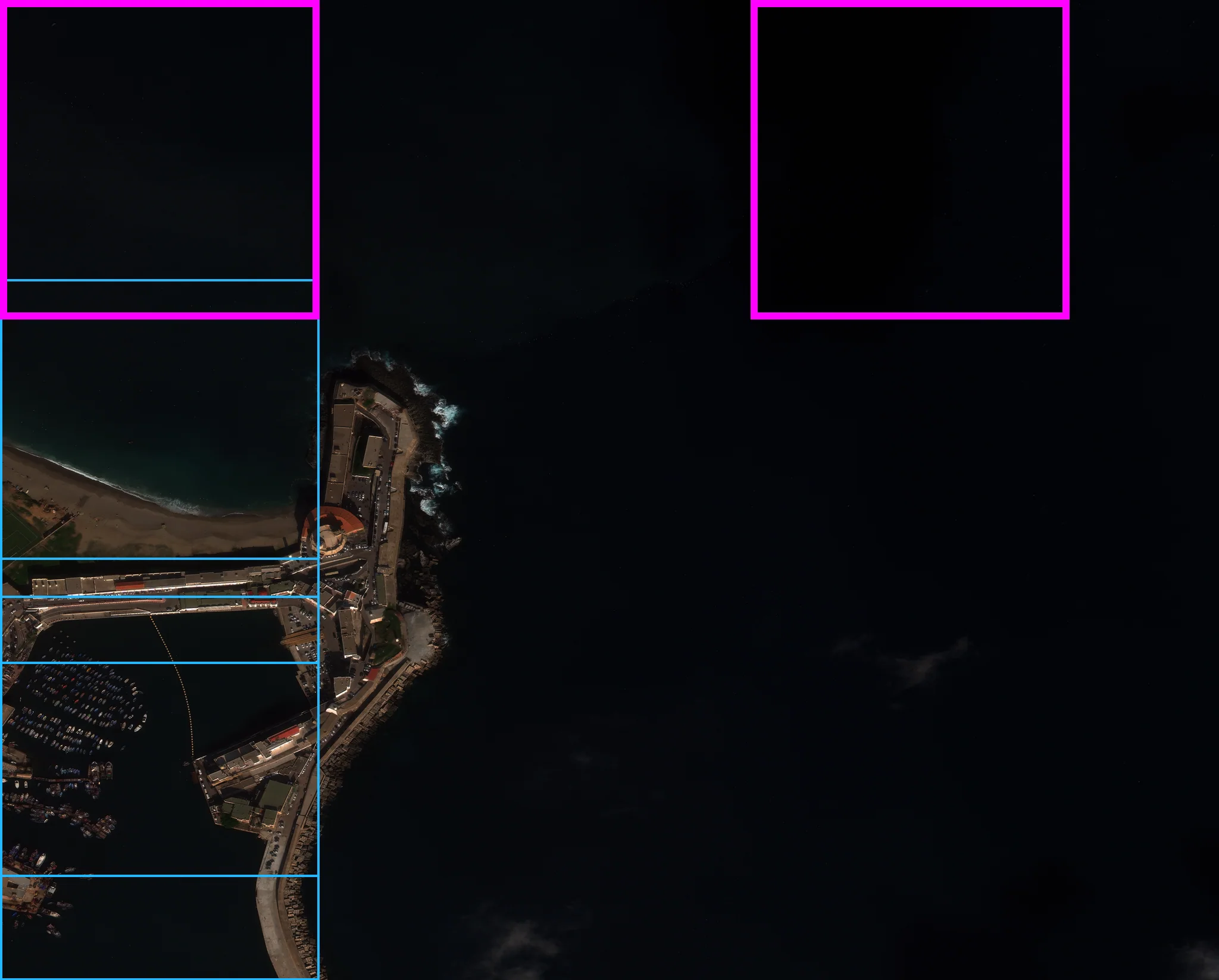
Recovery coverage
Dataset stability
Audit repair and quality filtering
Structural repairs made the dataset auditable before filtering policies were compared. Together, they produced the stable v9 / v2 active dataset used for later experiments.
Audit repairs
| Stage | Repair | Scope |
|---|---|---|
| v1 structural repair | Excluded low-resolution DOTA parents | 5 parents · 43 tiles |
| v1 label cleanup | Canonicalized duplicate windows and OBB labels | 10 windows · 120 labels |
| v1 coverage repair | Restored valid parent-to-tile projections | 233 occurrences |
| v1 recovery | Added deterministic recovery crops | 21 tiles |
| v2 residual repair | Reviewed residual atomic edge cases | 202 cases |
| v2 policy | Suppressed edges when a clean >=90% view existed | 183 cases |
| v2 recovery | Added deterministic recovery tiles | 14 tiles |
| promotion | Promoted repaired v2 as canonical active dataset | 3 stable roots |
Filtering highlights
| Variant | Policy | mAP50-95 |
|---|---|---|
| Baseline 100ep | Original reference | 0.61498 |
| v1 | Moderate filtering; retain bad parents | 0.69066 |
| v2 | Aggressive filtering; retain bad parents | 0.69383 |
| v5 | Aggressive filtering; seed 1, 40ep | 0.69438 |
| v9 | Aggressive filtering; seed 3, 40ep | 0.69585 |
| v10 | Aggressive filtering; seed 4 | 0.68932 |
Data-quality filtering improved the original shared-reference baseline from 0.61498 to roughly 0.69 mAP50-95 across multiple filtering variants.
05 / Controlled Experiments
Bounded evaluation after data stabilization
With the annotation system frozen and structurally audited, experiments followed a fixed sequence: data-quality filtering → OBB geometry → input resolution → augmentation → HPO. Small single-seed gains were treated as provisional unless they were replicated.
Ablation 01
Resolution
Preserving spatial detail materially improved small-target OBB supervision.
Ablation 02
Pixel expansion
Globally enlarging tight vessel OBBs reduced localization quality.
Ablation 03
Geometric augmentation
Rotation and flips held a positive paired multi-seed gain of +0.00648.
Selective annotation filtering outperformed removing entire degraded parents: 0.69257 +/- 0.00299 across five aggressive-filtering seeds.
YOLO11m-OBB · audit-fixed v9 / repair v2 · 1280 px · geometric rotation and flips · 40 epochs · batch 4 · seed 3.
0.70666 mAP50-95 · 0.95672 precision · 0.86197 recall
06 / Results and Failure Analysis
Strong conventional-vessel detection with known limits
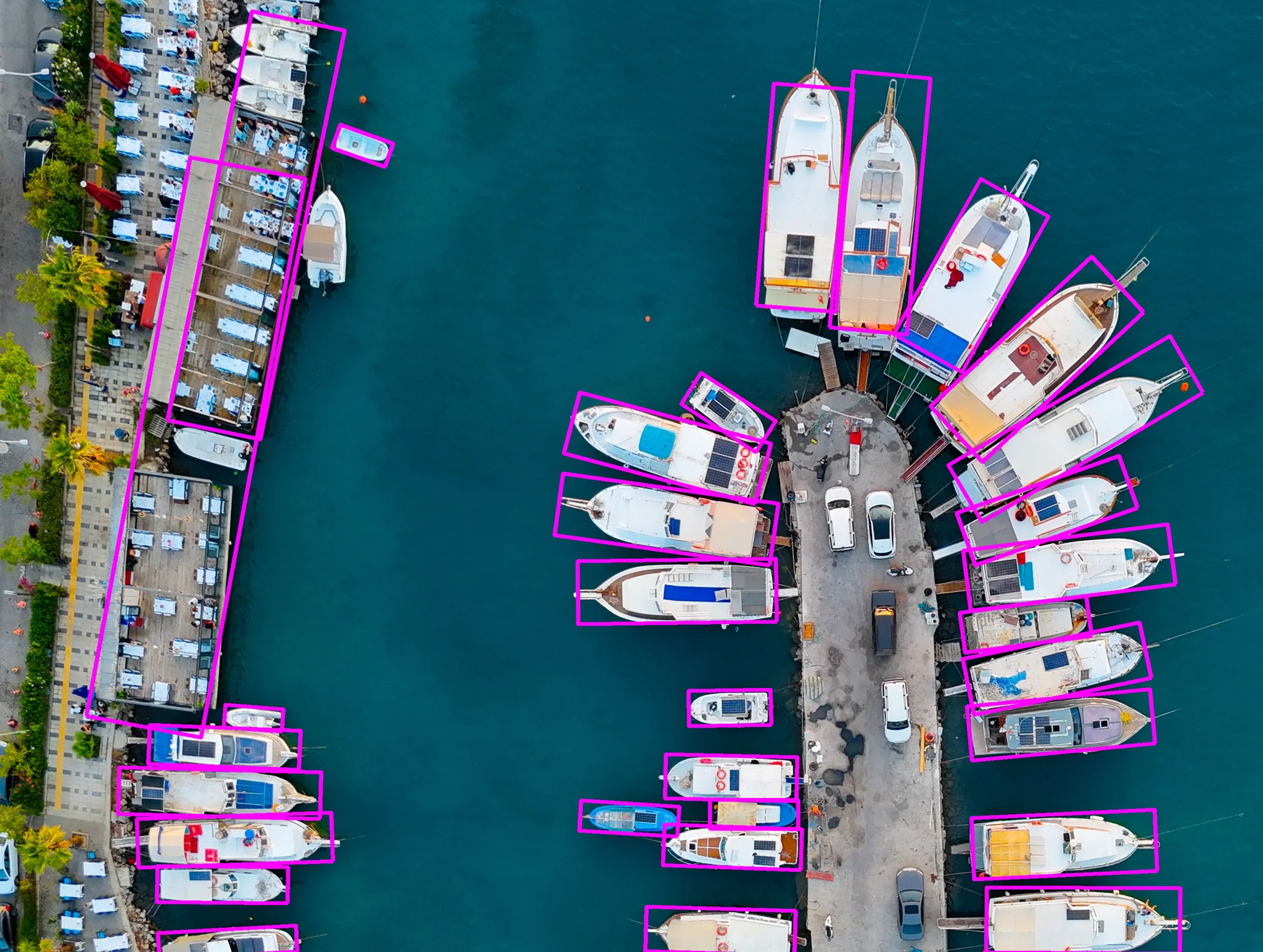
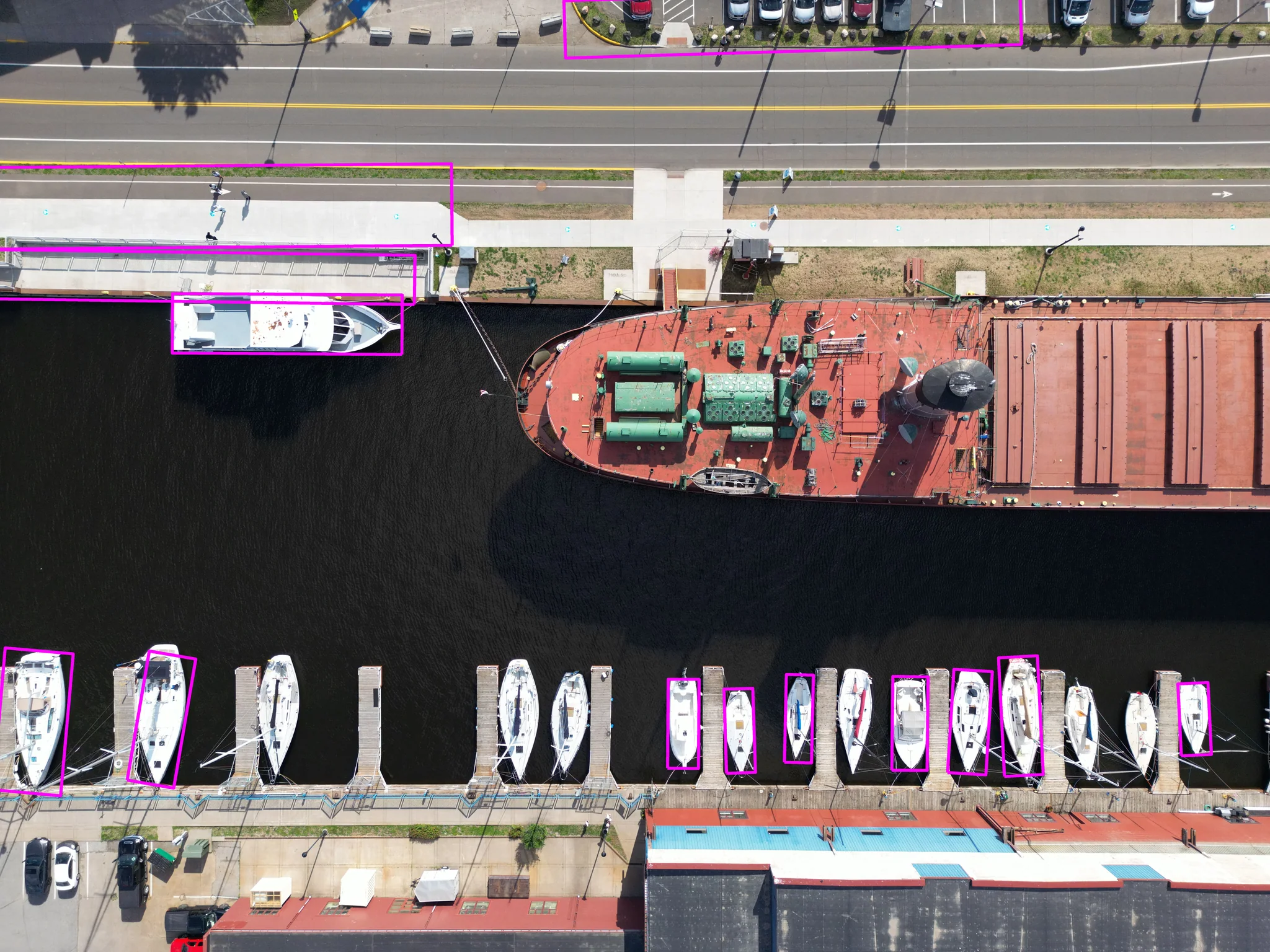
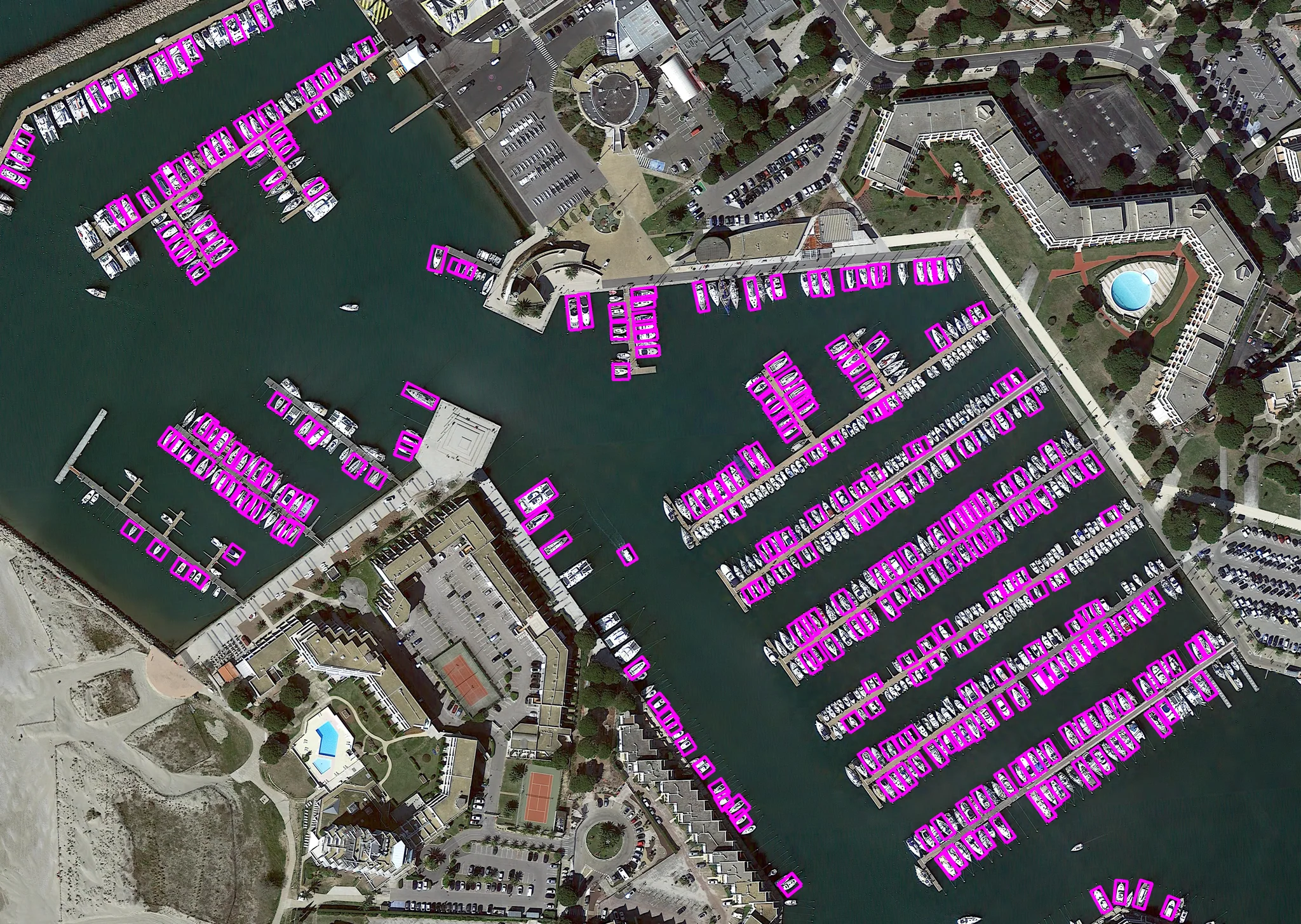
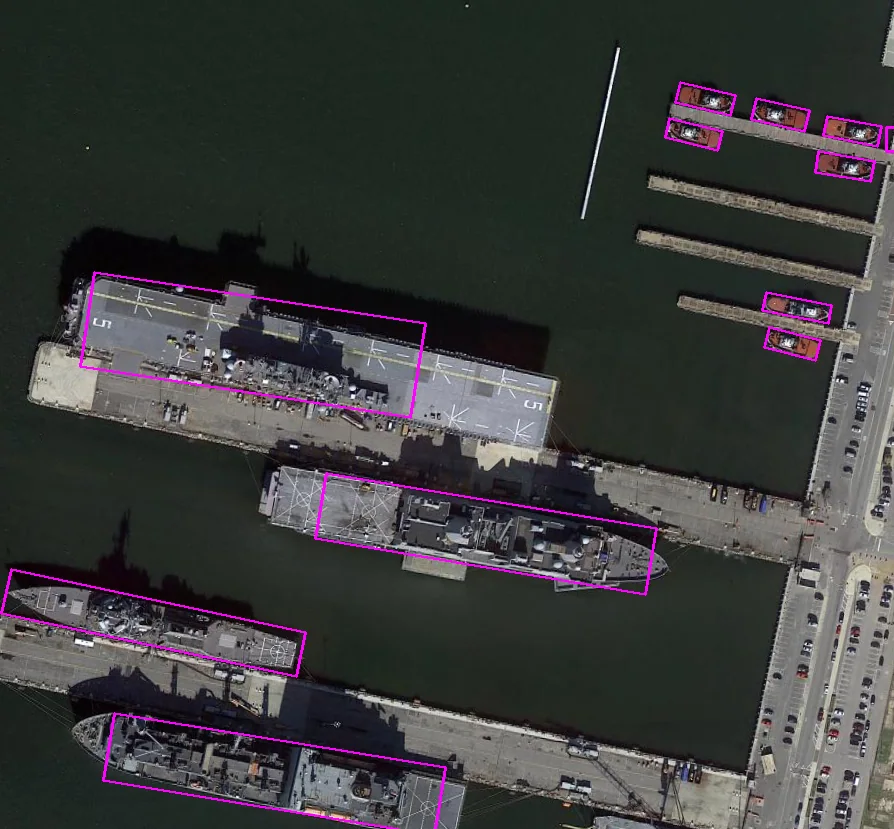
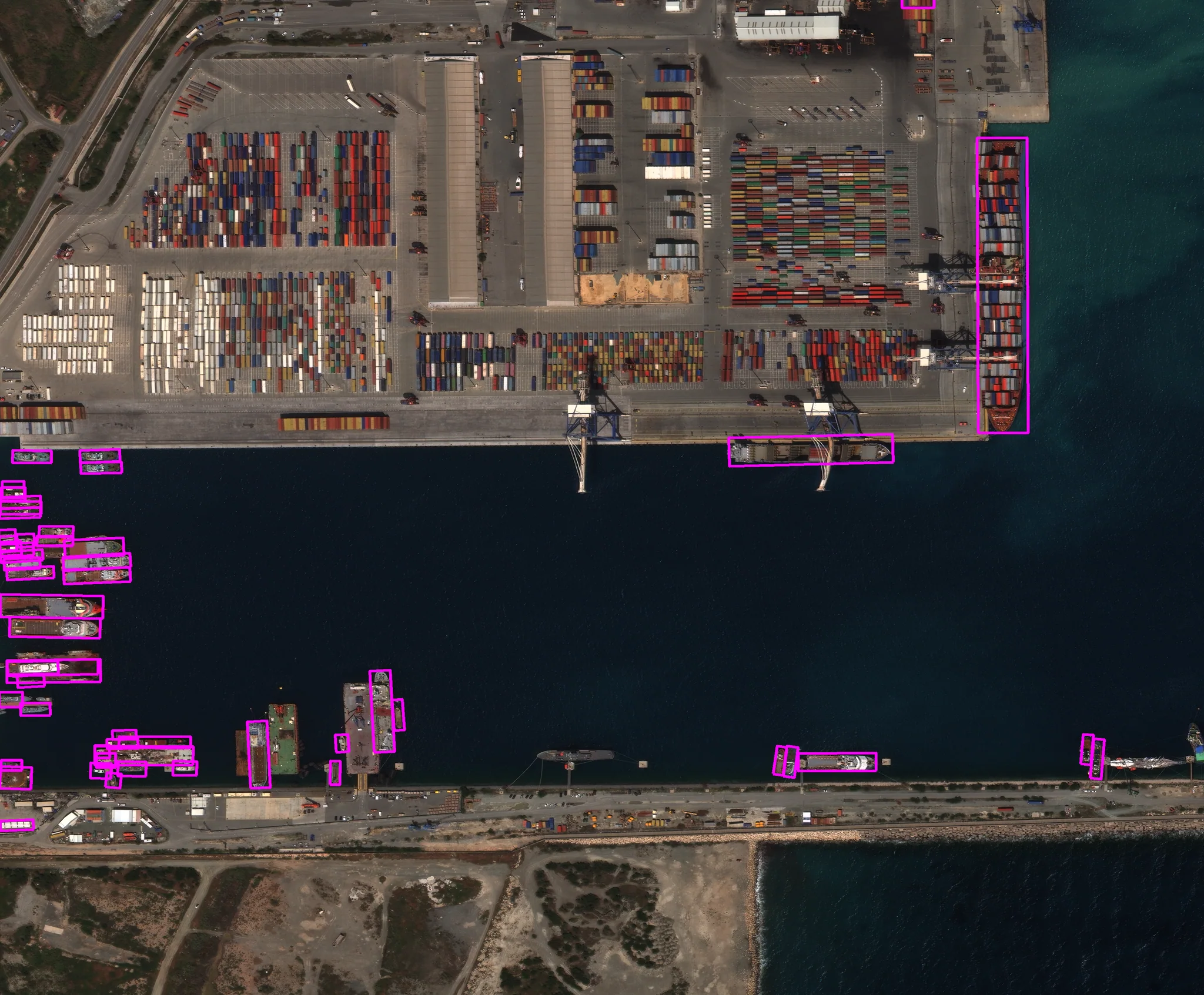
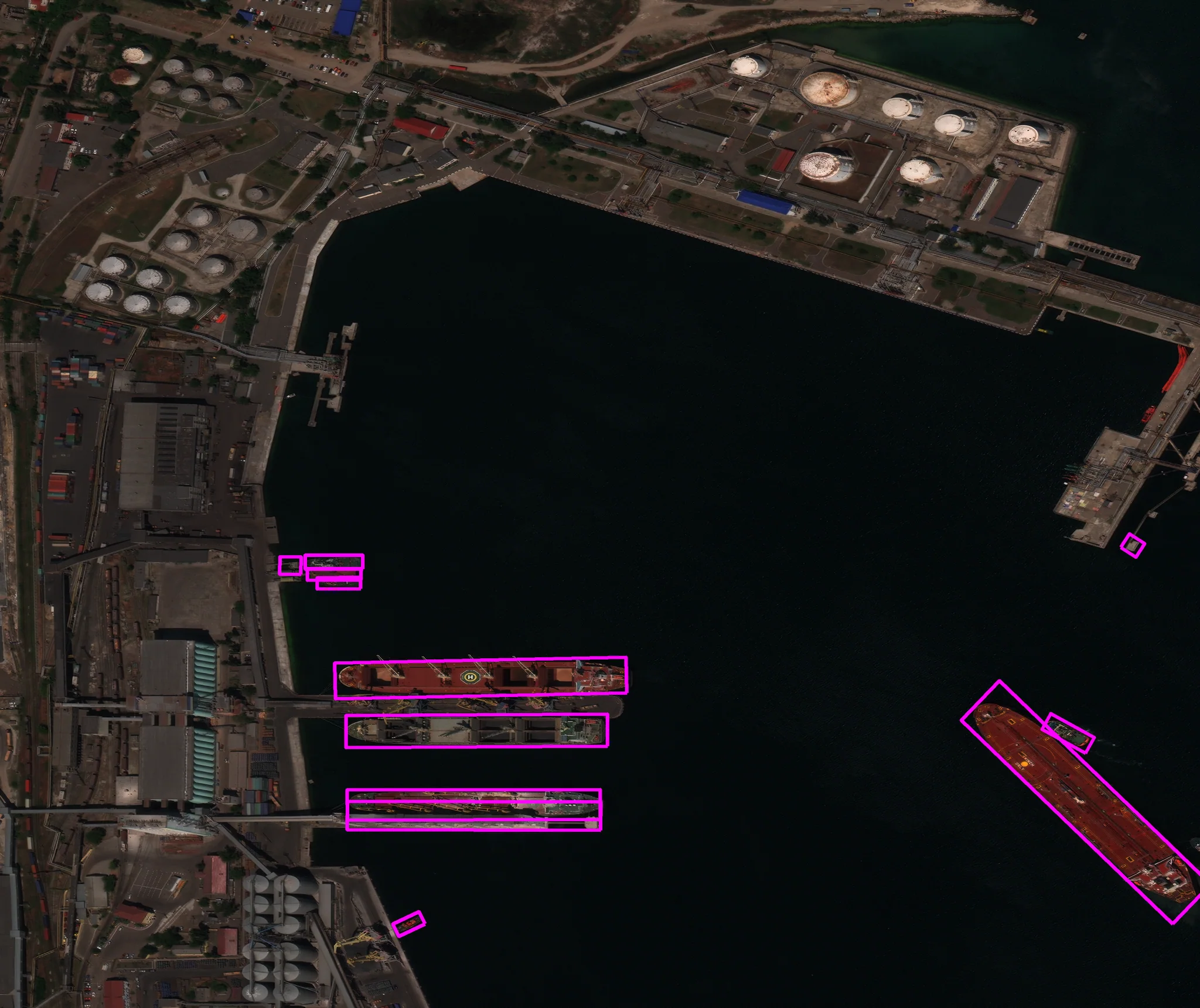
The final detector performs well on conventional vessels across many port and open-water scenes, but several systematic failure modes remain.
Common false positives
- long docks
- breakwaters
- marina structures
- other elongated port geometry
Difficult positive cases
- very small vessels at high ground sample distance
- tightly packed moored ships
- shoreline-adjacent vessels
- covered or stored ships
- low-contrast hulls
- scenes affected by haze, mist, or cloud
In dense marinas, adjacent vessels can merge into a single elongated detection when individual hull boundaries are poorly resolved. Further gains are more likely to come from targeted data refinement and additional high-quality maritime imagery than unconstrained hyperparameter search.
07 / Lessons Learned
What carried forward
- Annotation architecture should be decoupled from tiling policy
- Maintaining parent-space annotations as the source of truth made downstream tile generation reproducible and allowed tiling strategies to change without invalidating prior labels.
- Tiling is a distributional design choice
- Crop placement changes object truncation, duplicate exposure, negative context, and the effective sample balance seen during training.
- Image quality and label utility are independent
- Low-quality imagery can still provide valid large-object supervision and informative hard negatives. Filtering only by image quality can remove useful training signal.
- Spatial resolution constrains orientation supervision
- Small vessels can remain detectable after their geometry becomes too ambiguous to support reliable oriented-box annotations.
- Marginal gains require replication
- Multi-seed validation helped distinguish repeatable improvements from normal run-to-run variance when evaluating small model changes.
The complete IEEE-style technical report, live inference demo, and project links are available from the overview at the top of this page.
↑ Back to report and demo actions